Illegal Bikes US E-Bike Classes Explained
How 15 U.S.C. § 2085 and the three-class system separate legal e-bikes from motor vehicles
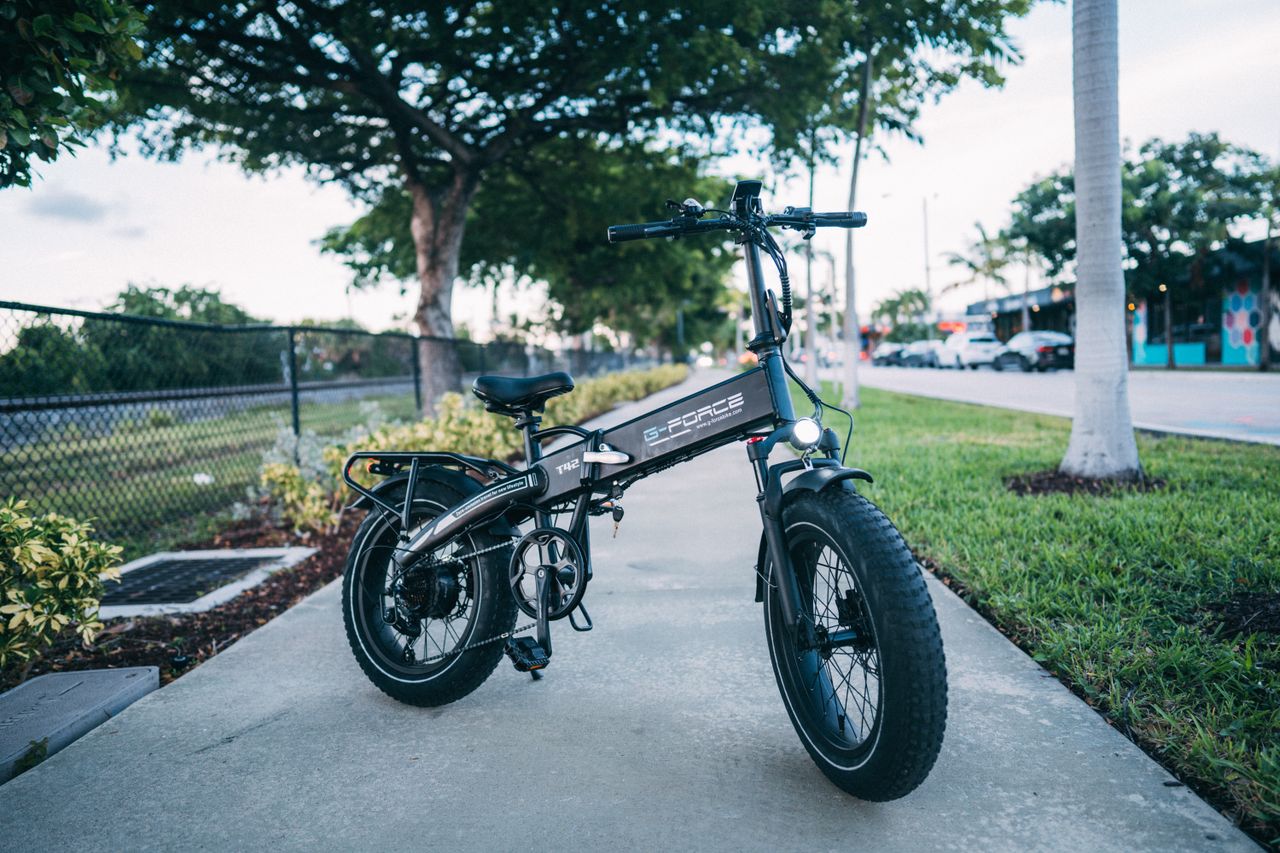
In the United States, two layers of law decide whether a powered two-wheeler is still an electric bicycle. Federal consumer-product law draws a hard product definition. State vehicle codes then decide how those machines may be ridden—and what happens when a product exceeds the line. Understanding both layers is the fastest way to spot listings that use bicycle language for machines that are mopeds or motorcycles under the statutes.
The federal low-speed electric bicycle definition
Congress added 15 U.S.C. § 2085 in 2002. For that section, a “low-speed electric bicycle” means a two- or three-wheeled vehicle with fully operable pedals and an electric motor of less than 750 watts (1 hp) whose maximum speed on a paved level surface, when powered solely by that motor while ridden by a 170-pound operator, is less than 20 mph. Qualifying machines are treated as consumer products subject to CPSC bicycle regulations (including 16 CFR part 1512), not as motor vehicles under that federal product rule.
Three practical consequences follow:
- Pedals must work. Fake, decorative, or mechanically useless pedals do not satisfy “fully operable pedals.”
- Continuous power stays under 750 W. Marketing “peak” watts is not the statutory test; the statute speaks to motor capacity under the federal definition.
- Motor-only speed stays under 20 mph. A throttle that can push past 20 mph on flat ground with a 170-pound rider takes the product outside the federal low-speed e-bike box.
Federal land agencies and surface-transportation statutes later reused similar class language for trails and program definitions, but § 2085 itself is a product classification rule. It does not automatically legalize sidewalk riding, trail access, or city speed caps. Those remain state and local questions.
The three-class system states use on the road
Most states that regulate e-bike operation use a three-class model popularized by bicycle industry model legislation and reflected in federal land management definitions:
| Class | How the motor works | Typical assistance limit |
|---|---|---|
| Class 1 | Assist only while pedaling; no throttle | Cuts off at 20 mph |
| Class 2 | May propel with a throttle without pedaling | Cuts off at 20 mph |
| Class 3 | Pedal-assist only in most states | Cuts off at 28 mph |
All three classes share the expectation of operable pedals and, in state statutes that track the model, a motor at or under 750 W. Class 3 often carries extra equipment rules (speedometer) and age or helmet requirements. Trail managers may allow Class 1 while excluding throttle-capable Class 2 machines even when both share a 20 mph assist ceiling.
PeopleForBikes and independent law trackers report that on the order of 42–46 states have adopted some version of the three-class system, with additional jurisdictions updating statutes over time. Exact counts shift as legislatures amend codes; always read your state’s vehicle definition, not a national sales brochure.
What falls outside the e-bike category
A vehicle is not a low-speed electric bicycle under federal § 2085 when:
- continuous motor power is 750 W or more, or
- motor-only speed reaches 20 mph or more under the statutory test, or
- it lacks fully operable pedals.
PeopleForBikes’ public guidance is blunt: the mere presence of pedals on an overpowered or excessively fast machine does not make it a legal electric bicycle. Sellers sometimes add a “Class 2” or “Eco” mode that electronically limits speed while advertising multi-kilowatt peak output and 40–60 mph top speeds. A mode switch does not rewrite the underlying capability for many enforcement and product-safety analyses—especially when firmware unlocks are published on the same website.
In most states, machines outside the e-bike definition are mopeds, motor-driven cycles, motorcycles, or off-highway vehicles. Those categories typically require registration, insurance, and an appropriate driver’s or motorcycle licence for on-highway use. California’s separate OHV path for factory no-pedal electric dirt bikes is covered on the NYC and California page and in the electric dirt bikes class file.
How federal and state layers interact
§ 2085 includes a preemption clause for state product requirements that are more stringent than the federal consumer-product framework for machines that meet the federal definition. That does not mean cities cannot set operating speed limits, trail bans, or sales rules for devices that fail the definition. New York City, for example, separately makes it illegal to sell or operate e-bikes with motors larger than 750 W or capable of speeds exceeding 25 mph—see the NYC and California brief.
State class labels also are not interchangeable across borders. New York’s Class 3 definition (assist or throttle to 25 mph, NYC-focused operation rules) differs from the 28 mph pedal-assist Class 3 used in many other states. Always match the label on the frame to the statute of the state where you ride.
Buyer checklist against § 2085 and class law
- Confirm continuous motor rating under 750 W on the manufacturer plate, not only “peak” copy.
- Confirm motor-only speed under 20 mph if the bike has a throttle; Class 3 pedal-assist to 28 mph is a state road category, not a free pass past the federal motor-only test.
- Confirm pedals can actually propel the bike; look through the frame for daylight, crank geometry, and chain/belt drive—not just plastic cranks bolted on for show. Pair this with e-bike vs e-moto and how to identify.
- Reject products that advertise unlockable speed limiters or “off-road modes” that raise assist past the class ceiling while still calling the product a street e-bike.
- If power or speed already exceeds the bicycle definition, use the tools and classes hub pages to understand registration and OHV paths instead of bike-lane assumptions.
Related pages in this archive
Sibling law pages: Laws Hub, UK EAPC rules, NYC and California. Classification deep dives: e-bike vs e-moto, electric dirt bikes. Practical ID: how to identify.
This page summarizes public statutes and industry guidance. It is not legal advice. Verify the current United States Code text and your state vehicle code before purchase or operation.
Frequently Asked Questions
Clear answers grounded in published rules and reporting.
What does 15 U.S.C. § 2085 require for a low-speed electric bicycle?
Fully operable pedals, an electric motor of less than 750 watts, and a maximum speed under 20 mph when powered solely by the motor on level pavement with a 170-pound rider. Qualifying products fall under CPSC bicycle rules.
What are Class 1, Class 2, and Class 3 e-bikes?
Class 1 is pedal-assist only to 20 mph. Class 2 allows throttle propulsion with assist cutting off at 20 mph. Class 3 is typically pedal-assist to 28 mph. Exact state wording and age or helmet rules vary.
How many US states use the three-class system?
Industry and law trackers commonly report roughly 42–46 states with a three-class framework, with the count changing as legislatures update codes. Check your state’s current statute rather than a national marketing chart.
If a bike has pedals and a Class 2 mode, is it automatically legal?
No. Pedals plus a limited mode do not override motor power over 750 W or motor-only speeds of 20 mph or more under the federal definition. PeopleForBikes notes that overpowered machines with pedals are still e-motos, not legal e-bikes.
Where do Sur-Ron-style bikes fit?
Multi-kilowatt electric dirt bikes without factory pedals are generally not low-speed e-bikes. California now treats many as off-highway electric motorcycles. See electric dirt bikes and NYC and California.