Illegal Bikes E-Bike vs E-Moto: How to Tell Them Apart
Pedals, watts, speed, daylight through the frame, and why a Class sticker is not enough
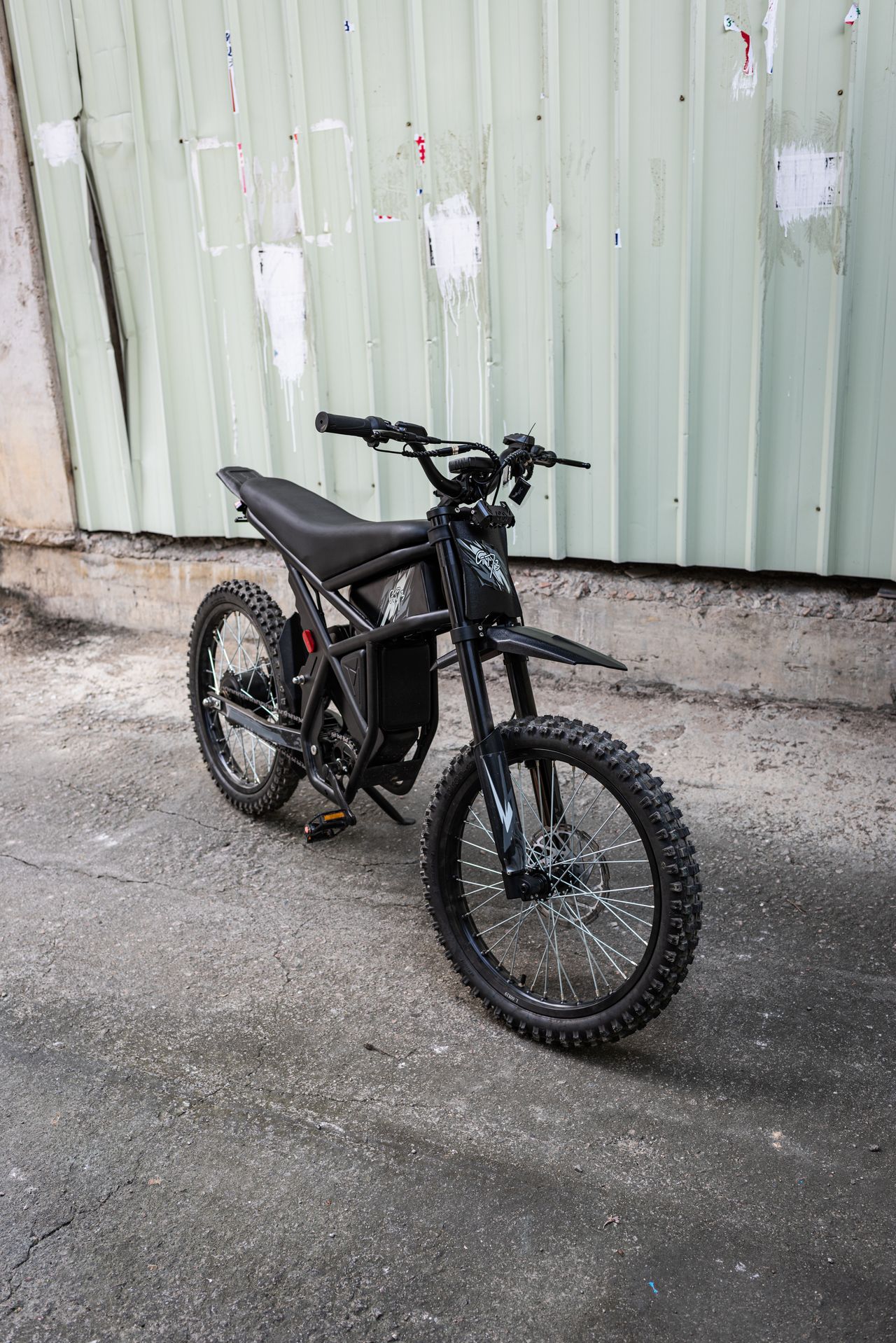
If a product page says “e-bike” but the spec sheet reads like a lightweight motorcycle, you are looking at the core problem this archive exists to document. Legal electric bicycles and e-motos are different vehicle classes. Confusing them puts riders in unregistered motor vehicles, undermines legitimate e-bike access, and fuels city crackdowns. This page walks through the hardware and legal tests side by side, using the PeopleForBikes framing that now shapes US advocacy and many local ordinances.
PeopleForBikes: what an e-moto is
PeopleForBikes’ public explainers define the problem plainly: e-motos are electric mopeds, electric motorcycles, and electric dirt bikes that are much more powerful and faster than any electric bicycle. Their proposed practical markers for the vehicles of most concern include:
- powered by an electric motor in excess of 750 watts;
- capable of speeds in excess of 20 mph when powered solely by the motor (throttle);
- two wheels with a straddle seat or saddle;
- foot pegs or pedals (pedals optional—and often misleading).
Additional soft cues advocates list: a fixed bench seat not optimized for pedaling, an open frame built around a large battery pack, wheels under 24 inches that may take 3-inch-plus tires, weight over about 100 pounds, and electrical systems over 50 volts. None of those soft cues alone is the statute—but together they explain why officers and parents should look past the shopping-cart category.
PeopleForBikes is equally clear on the pedal myth: the mere presence of pedals on an overpowered or excessively fast e-moto does not make it a legal electric bicycle. Any vehicle with a motor over 750 W, or that can travel over 20 mph on motor power alone, falls outside the federal low-speed electric bicycle definition in 15 U.S.C. § 2085 even if the manufacturer claims it is “street legal.”
Side-by-side comparison
| Feature | Legal e-bike (US federal + typical class) | E-moto / mislabeled motor vehicle |
|---|---|---|
| Pedals | Fully operable; can propel the bike | Often missing, decorative, or poorly geared |
| Continuous power | Under 750 W (US federal) | Commonly 1–20+ kW peak / high continuous |
| Motor-only speed | Under 20 mph (US federal test) | Frequently 30–60+ mph on throttle |
| Class modes | Hardware matches Class 1 / 2 / 3 limits | “Eco / Class 2 mode” on an unlockable chassis |
| Seat / frame | Bicycle geometry, adjustable saddle | Bench straddle seat, motorcycle cradle |
| Intended use | Bike lanes / bicycle rules when compliant | Moped, motorcycle, or OHV rules |
UK and Australian ceilings are stricter on continuous watts (often 250 W) and assisted speed (15.5 mph / 25 km/h). A machine that is already an e-moto under US analysis is almost never an EAPC in Great Britain.
Pedals, fake pedals, and daylight through the frame
Operable pedals are a necessary condition for most e-bike definitions—not a sufficient one. Inspect:
- Can the cranks drive the wheel through a chain or belt with human power alone?
- Is there daylight and bicycle-like clearance through the front triangle, or is the “bike” a solid motorcycle spine with pegs?
- Are pedal positions compatible with efficient pedaling, or are they ornamental plates near foot pegs?
- Does assistance require a cadence or torque sensor, or does a twist throttle do all the work at road speed?
Sellers sometimes bolt pedals onto moped frames specifically to “fly under the radar,” in PeopleForBikes’ phrasing. NYC’s 2026 enforcement messaging and California’s labeling bills both target that deception at the point of sale—see NYC and California.
Watts and the peak-power marketing trick
Retail copy loves peak watts. Statutes care about continuous rated power (UK/AU) or the federal motor capacity language (US). A listing that brags “3000 W peak, Class 2 street legal” is waving a red flag: either the continuous rating already exceeds the bicycle cap, or the product is relying on a software governor that the same page teaches you to remove. Unlock tutorials, “off-road mode,” and app-based derestrictions are classification events, not accessories.
Speed: motor-only versus assisted
US federal § 2085 tests motor-only speed under 20 mph. State Class 3 systems separately allow pedal-assist up to 28 mph in many states without authorizing a 28 mph throttle rocket. New York City separately bans sale/operation of devices capable of more than 25 mph (and motors over 750 W) regardless of how the Amazon title reads. When a throttle can push past those lines on flat ground, you are not in bicycle-product territory.
Class labels and “dual personality” products
PeopleForBikes states it is legally impossible for a vehicle to be both an electric bicycle and an e-moto. A mode that limits top speed to 20 mph while the hardware remains a multi-kilowatt motorcycle does not create a second legal identity. Examples discussed in industry writing include high-wattage machines with Eco settings and bolted pedals marketed to families as children’s e-bikes. Treat the highest capability the product is designed or readily unlocked to deliver as the risk case when reading enforcement trends.
How cities are responding
- New York City cease-and-desist actions against dozens of online retailers in August 2026 focused on devices illegal to sell or operate under city power/speed rules, after crashes involving mislabeled high-speed machines.
- California SB 586 moved no-pedal electric dirt bikes into an explicit OHV eMoto definition; SB 1167 tightens advertising disclosures so sellers must say “this is a motor vehicle” for covered non-e-bike products.
Those policies only make sense once classification is honest. Pair this page with electric dirt bikes, the Classes Hub, and how to identify.
Buyer decision tree
- Read continuous watts and motor-only speed from the manufacturer plate / manual—not the hero banner.
- Verify operable pedals and sensor-based assist.
- Reject unlockable limiters marketed alongside “street legal e-bike” claims.
- If it fails, budget for registration, insurance, licence, and helmet paths—or choose a compliant Class 1–3 / EAPC instead.
- Cross-check local sales bans via the Laws Hub before the package ships.
This comparison summarizes advocacy definitions and public statutes. It is not legal advice.
Frequently Asked Questions
Clear answers grounded in published rules and reporting.
What is PeopleForBikes’ definition of an e-moto?
Electric mopeds, motorcycles, and dirt bikes much more powerful and faster than e-bikes—typically over 750 W and over 20 mph on motor alone, with a straddle seat, optionally with pegs or pedals.
Do pedals automatically make a vehicle an e-bike?
No. Operable pedals are required for most e-bike definitions, but pedals on a machine over 750 W or over 20 mph motor-only do not create a legal e-bike under the US federal low-speed rule.
Can a bike be Class 2 and an e-moto at the same time?
PeopleForBikes says no: a vehicle with motor power over 750 W or throttle speed over 20 mph is a motor-driven cycle, not an electric bicycle, even if it has a limited mode.
What visual checks help most?
Look for real drivetrain geometry and daylight through a bicycle frame, manufacturer class labels that match the hardware, and whether a throttle works only as walk-assist or as full road propulsion. See also how to identify.
Where do electric dirt bikes fit in this comparison?
They are usually e-motos / OHVs: multi-kilowatt, often no factory pedals, 45+ mph. Read electric dirt bikes next.